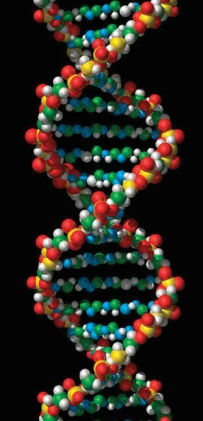
When my partner asked me what I wanted for Christmas one year, I told him, “Only one thing: A DNA test.” The holiday would come exactly one month before a big birthday for me and, having already been there himself, he held his tongue and nodded.
With the decades passing, my longstanding curiosity about whether I carry Native American heritage from my maternal grandmother, who was reported to be part Cherokee, suddenly seemed urgent. Everyone in her family was gone before I was interested enough to start digging, but then I saw on Henry Louis Gates’ wonderful series, “Faces of America,” that one DNA test can reveal the percentage of four ethnic heritages. After Christmas, with the results of mouth swabs wending their non-virtual way to a lab, I turned my attention to the other side of my family and began to follow the internet “paper” trail of my Milnor ancestors, who are more traceable.
The strange thing is, when I was 20 years old, the last thing in the world I wanted was to know more about either side of my family. Both of them had their share of dysfunctions and eccentricities, fault lines found in too many families. Beyond the personal issues, the atmosphere was difficult for a young person. Maybe it was the fact that my mother’s family regarded my sister and me as perverse for our commitment to academics and Civil Rights and religious questioning. Whatever the reason, I felt like an alien, and all I wanted was to break free and discover who I really was.
Things come around, though, and the question of “Who was it given to me to be?” becomes more interesting. My recent obsession makes me think of the one of the most famous paintings in Western Art, Gaugin’s masterpiece titled, “Where Do We Come From? What Are We? Where Are We Going?” Gaugin portrays human beings of different ages in an exotic blue garden-world, all engaged in conversation or reflection or prayer. The artist probably had in mind something more philosophical than tracing ancestry, but the quest is the same. However much we treasure being alive on this marvelous planet in this moment of time, we need a human scale for it. Why here and not somewhere else? Was anything meant to be? How in our own lives might we be playing out a longer storyline that ties us to others?
As an adopted person can tell you, that’s a piece of personal narration that holds deep interest for most human beings. Sometimes people simply want to find out where they came from in the most fundamental way – names, places, medical history. For others – here I’m not talking about adoption — genealogy can be a misplaced bid for respectability or purity. My sister, who was for a while the library director at a well known historical society, saw people throw fits when researchers identified an ancestor of a race or ethnicity or religion they did not want to own. In most cases, she says, they just refused to believe it. But, more sympathetically, the impulse to trace ancestry can also reflect a search for wholeness. Here in the middle of Black History month, I can’t help but recall the phenomenon of Alex Haley’s Roots. The stirring emotional victory of that story was rooted in finding a past of dignity, hidden behind a seemingly impenetrable cloak of oppression. What made Kunta Kinte a symbol of hope and possibility was the connection to a spiritually rich life in the past, which, reclaimed, would become a roadmap to a spiritually integrated life in the future. As the writer Stephen Ambrose said, “The past is a source of knowledge, and the future is a source of hope. Love of the past implies faith in the future.”
Ironically, our own Unitarian Universalism, which focuses so much on the future, on what we are now, a religion which most of us have adopted and been adopted by, even shows the same need to connect itself to the lineages of the past. Consider how we pull the names of famous Unitarians and Universalists from history and put them on tee shirts or in religious education curricula – Susan B. Anthony, Ralph Waldo Emerson, Henry David Thoreau. We want to know their beliefs, yes; we want to know our history; but in a world that regards our religion a little like my mother’s extended family regarded my sister and me for our politics and values, we also want to claim our legitimacy. We are connected to great people, we are saying; great people embraced the same ideas we do; we are not a cult. And believe me, as a minister who has had to defend our religion many times, I sympathize. I pull those great ones out too.
Above and beneath all, though, what we seek is kinship. We need to be bonded with others in a way that survives our limited time on this earth; it’s one way that we seek immortality and a footprint of meaning on the planet. We want to be bonded, in other words, in a way that goes past time. Sometimes looking for long lost stories seems to answer a longing for a spiritual kinship we have not experienced in family. I know now what an indulgence of a dominant culture it was to want to have Cherokee blood, and I wish I hadn’t assumed that another culture was available to me that way. But I also know I longed for a tie to a totally different world than the white, Southern Baptist, conservative milieu of my mother’s family, a tie based more in spirit and nature. And so I became interested in my father’s ancestry because I know there were Quakers. In fact, I’ve recently learned, the first Milnors bought land from William Penn and arrived in Philadelphia in 1682 on a ship full of Quakers called the Friends’ Adventure. One was excommunicated from the Friends for supporting the American Revolution and went on to help found the Free Quaker Society. Maybe religious rebellion was in my blood, I thought; maybe my tendency in my own life to uproot myself, make changes and move, was just part of a genetic predisposition to wander. Perhaps I have a spiritual kinship with those from whom I came. The thoughts, romantic though they are, allow me to feel a little less alone, not in the here and now, but in the long span of history.
As much fun as it is to explore such ties, they only take you so far. There were later Milnors, after all, who became staid lawyers or clerics or merchants and ones who deserted Quaker meeting for the more respectable Episcopal church. In my mother’s father’s forebears, I found hints of involvement in an ugly vigilante gang warfare in the hills of Tennessee, one gang being a group of men who set out to enforce with violence a moral code against women they believe had strayed from the righteous path. I don’t think I want to go there at all.
Our Unitarian Universalist religion teaches us that kinship is very important, but it teaches that the deepest, most lasting and inclusive kinship is the spiritual kinship we feel which goes beyond blood ties. What moves us and our lives, what moves the world at times, is spiritual legacy: the kinship we feel when we read a great poem or encounter a great idea or participate in a great movement. Our spiritual ancestors left their legacies not just for those who bear their blood or their race or their names, but for all human beings who have the courage to take up the inheritance.
While I watched the faces of those protesting in Tahrir Square, and listened to many of the people speak so intelligently and thoughtfully, when I saw them hungry for freedom and tired of oppression, I couldn’t help but flash onto a couple of personal images. I saw Quakers, who had fled persecution in Europe, step off a ship, their eyes focused on a different future. Whether there is really anything of their journey in my blood, I don’t know, and may never know, but it doesn’t matter. I am part of a faith community that finds spiritual kinship among all people of good will who value freedom and seek justice. That’s what Siding with Love is about. It’s what the interdependent web of existence is about.
And we are even backed up by science. Anthropologists now claim that everyone on the planet is at least a 40th cousin of everyone else and that, ultimately, all of us are descended from a single maternal line on the savannah of Africa. Other humans existed at the time of this woman, of course, but because of complex mathematical principles of genetics, we know that all the mitrochondrial DNA today ultimately traces back to one mother. I don’t like to think what that means about the poetic justice of the Adam and Eve story, but I do like to think that we are not, at the deepest level, imagining kinship with those people fighting for freedom in Egypt or the women struggling for life in Afghanistan. We are related to them in every way. As C.S. Lewis wrote, “If you could see humanity spread out in time, as God sees it, it would look like one single growing thing – rather like a very complicated tree. Every individual would appear connected with every other.”
During the wake of revolution in Egypt an interesting story surfaced. Dalia Ziada, the Egyptian Director of American Islamic Congress, had reprinted 2000 copies of a comic book story about Martin Luther King, Jr., called “The Montgomery Story,” essentially the story of nonviolent resistance, which she then distributed throughout the Middle East. There were people in Tahrir Square who had read that comic book. Her effort wasn’t an easy one; in fact, an Egyptian Security Officer had initially blocked its publication. When Ziada met with him, she tried to answer all of his concerns, and eventually he agreed to lift his ban on the book. Before she left, however, he made a personal request, “Could I have a few extra copies for my kids?” Who wouldn’t want a comic book about his fortieth cousin?
Genealogy can be fun; it can be moving; and it can even reveal important threads of our own personal stories. More importantly, though, our religious legacy insists that there is one human family, and science seems to be gracing us with a brilliant confirmation of our spiritual conviction. If we do our spiritual genealogy, we will be clear on something else: we are called to use our inheritances to make connections and not to sever them; to include and not to exclude; to find common ground and not to cast ourselves as superior.
Walls can fall, and circles of kinship can widen. If they do, we will surely live past our time, and we will surely blessed be.
 Reverend Susan Milnor